Soft Washing vs Pressure Washing on West London's Period Tiles
When you start looking into getting your roof cleaned, you will hear two terms thrown around: soft washing and pressure washing. They sound similar. They are not. On the period tiles that cover so much of West London, the difference between them is the difference between a roof that lasts and one that starts failing.
Getting this choice right matters more here than in most places, because West London is full of old, delicate roofs. Here is what each method actually does, why it matters for your tiles, and how to make sure you get the right one.
The quick answer: Soft washing uses low-pressure spray and a biocide treatment to kill moss and algae gently. Pressure washing blasts them off with a high-pressure jet that strips and cracks old tiles and forces water underneath. On West London's aged clay and slate, soft washing is the only safe choice.
1. Two methods, very different outcomes
Both methods aim to get the green off your roof, and both can manage it. The difference is what they leave behind. One clears the moss and leaves the tiles as they were. The other clears the moss and takes a layer of your roof with it.
That is the whole thing in a sentence. But the detail matters, because the damage from the wrong method does not always show straight away. It turns up months later as slipped tiles, fresh leaks, and moss coming back thicker than before.
2. What soft washing actually does
Soft washing works at low pressure, closer to a garden hose than a jet. The real work is done by a biocide treatment that soaks into the moss, algae, and lichen and kills them at the root. Over the following weeks the dead growth dries out and the weather rinses it away.
Nothing gets hammered off. Nothing gets forced under the tiles. The treatment does the killing and time does the clearing, which is why soft washing suits fragile old roofs. It also lasts longer, because killing the growth at the root slows how fast it grows back.
3. What pressure washing does to old tiles
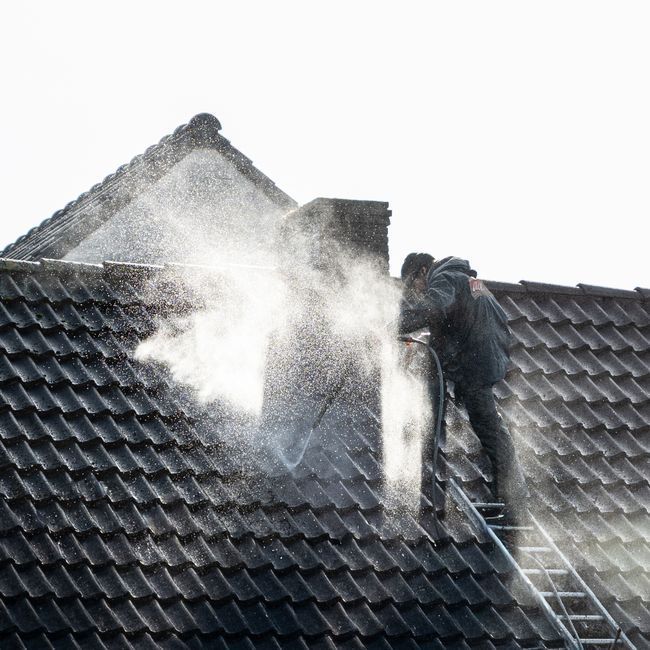
Pressure washing takes the opposite approach. A high-pressure jet physically blasts the moss off the surface. It is fast and the instant result looks impressive, which is exactly why cheap operators favour it.
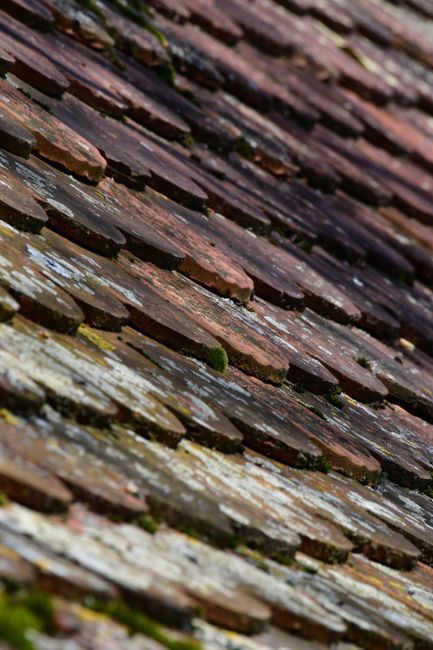
The problem is what that force does to an old tile. It strips the fired outer skin off clay and the natural face off slate, leaving the tile porous and rough. It cracks brittle tiles outright. And it drives water under the laps and into the roof timbers. On a period roof, all three are serious, and the roughened surface grows moss back faster, so the whole cycle speeds up.
4. Why West London's period roofs are especially at risk
This matters more in West London than in a modern suburb because of what is on the roofs here. The Victorian and Edwardian homes of Ealing, Chiswick, and Bedford Park are covered in old natural slate and decorative clay, much of it original and all of it aged.
Those materials are precisely the ones pressure washing ruins fastest. A hundred-year-old clay tile has already lost some of its surface to weather, so a jet finishes the job in seconds. Replacing period tiles to match is difficult and expensive, if it is even possible. There is far more to lose here than on a roof of modern concrete tile.
5. The false economy of a cheap blast
A pressure-wash quote often comes in cheaper, and it is tempting. But look at what you are really buying. The roof looks great for a couple of weeks, then the stripped tiles start shedding and the moss returns thicker on the roughened surface.
Within a year or two you are paying again, either for another clean or, worse, for repairs to cracked and slipped tiles. A soft wash costs a little more up front and holds up for years. Cheap once usually means paying twice, and on a period roof the second bill can be enormous.
6. When higher pressure has a place
To be fair, pressure washing is not useless everywhere. On hard, flat surfaces like a concrete driveway or patio, higher pressure is fine and often the right tool. The trouble is only when it meets a roof.
On tiles, and especially on old ones, the surface is too delicate and the water gets in too easily. So the honest answer is simple. Save the pressure washer for the drive, and use soft washing on the roof. Matching the method to the surface is the whole trick.
Soft washing vs pressure washing at a glance:
- Pressure on the tiles: soft washing is gentle and low pressure, pressure washing is a forceful jet.
- How it clears growth: soft washing kills it at the root, pressure washing blasts it off the surface.
- Effect on old tiles: soft washing leaves them intact, pressure washing strips and cracks them.
- How long it lasts: soft washing slows regrowth for years, pressure washing grows back faster.
- Right surface: soft washing for roofs, pressure washing only for hard ground like drives.
Frequently Asked Questions
Is pressure washing ever safe on a roof?
Rarely, and almost never on the old clay and slate common in West London. High pressure strips the surface, cracks tiles, and forces water in. Soft washing is the safe method for any tiled or slate roof.
Does soft washing really work as well?
Yes, and it lasts longer. It kills the moss and algae at the root so they clear over a few weeks and grow back more slowly. Pressure washing only removes what is on the surface that day.
Why is my quote for soft washing higher than for a pressure wash?
Soft washing takes more time and skill and uses a proper treatment. The pressure wash is quicker and harsher, which is why it is cheaper and why it often costs more in the long run.
Will soft washing get my roof as clean straight away?
The growth is killed on the day, then dries and washes off over the following weeks, so the roof keeps improving. It is less instant than a blast but far kinder to the tiles.
My roof has original Edwardian tiles. Which method should I insist on?
Soft washing, without question. Original period tiles are exactly what pressure washing ruins fastest, and matching replacements is difficult and costly.
Want your roof cleaned the safe way?
Ben's Roof Cleaning uses low-pressure soft washing on period roofs across West London, with over 15 years of experience. Get in touch or call 020 4509 8191
for a free, no-obligation quote.
The method makes the difference
Choosing how your roof gets cleaned is really choosing whether it comes out better or worse. On West London's old clay and slate, a gentle soft wash clears the moss and leaves a hundred-year-old roof intact, while a cheap pressure blast strips it and starts a cycle of damage. Ask which method you are getting before anyone climbs up, and make sure the answer is the gentle one.